STEAM VS STEM
STEM has been a crucial part of our education system and dates back to the “Space Race” between the U.S. and the Soviet Union, while STEAM has been around since 2006. A key leader in the change from STEM to STEAM was Georgette Yakman, an incredible teacher who led the STEAM framework in 2006.
While the history of STEM and STEAM is important, the goal is not to give you a history lesson on the development of these two practices in education. The goal is to give you an insight into why you do not have to choose between STEM or STEAM in your classroom. As educators, we are always trying to find the best way to teach young learners, and it can become a task that we begin to dislike if it does not go the way we expect it to.
How can one teach a lesson plan and incorporate STEM/STEAM in the classroom without having to think about which framework is best? How can educators focus on one lesson plan, a lesson plan that implements Science, Technology, Engineering, Art, Math, and a learning outcome? What if there is no art to teach or implement in the lesson plan? How do I incorporate technology into my lesson? What do I need to do to add math? While these are simple questions, as an educator, it can be difficult to keep your children engaged and cover all your bases.
We are here to tell you that it can be done. The following will be a step-by-step lesson that tackles STEM/STEAM education in the classroom and a reflection and conclusion of the experience from a teacher’s perspective. The following is the lesson plan and learning objective:
Lesson Topic: Erosion
Learning Objective: Children understand the process of weathering and the causes of erosion.
The learning topic and learning objective are always going to be your starting point for any curriculum planning you are working on. The tricky part was figuring out how to turn this lesson into a learning experience that could cover all the subjects (STEM/STEAM). So, I went to the drawing board (my notebook) and wrote all the ideas that I had about erosion and how to make this a fun learning experience. I came up with the following:
S: Children explore weathering, erosion, and deposition through a hands-on activity where they have to make sediments to move ( cause erosion).
T: Children use their resources to conduct research, create an apparatus to cause erosion, and/or use tools to support their ideas.
E: Students research, design, and create an environment that has encountered erosion.
M: The children use a unit of measurement to learn about erosion (time, speed, distance, etc.)
And of course, we cannot forget about the “A” in STEAM…
A: Children work on an illustration (drawing, painting, design) of their ideas of what erosion looks like before and after.
Now, after taking a few notes and figuring out how to explore this topic with my students, I can say that I also had a quick thought about choosing between STEM and STEAM. I am not sure if this is something as educators that has been instilled in our minds, but I was worried that I wasn't going to be able to incorporate art into my lesson. I can see why it makes sense; STEM focuses on all the academics, right? You learn math and science, work with technology or use it, and become an engineer in the process. When the lesson plan became part of my day, and the children began to explore erosion, I remembered that when you use a project-based learning approach, you do not have to worry about the “A” in STEM. We do not need to worry about the arts, not because we do not want to incorporate them, but because it should emerge naturally in the curriculum. In the next section, I will give you a summary of the lesson, the activities that occurred, and my reflection on the experience the children encountered.
The first thing was to introduce what erosion is. I did this during a morning meeting. The questions that allowed children to explore this topic during our morning meeting were:
What are environments that you believe have been formed by erosion? What do you think made that happen? The wind? Water?
This question challenged the children to think and share answers based on their own experiences and knowledge. Little did I know that they would share the following answers: The Grand Canyon. The beach? What about rivers does that erosion? I think the dirt outside has erosion. I was happy to find out that they were engaged and answering with ideas and questions. The next step was to figure out how to keep the momentum going. How did I extend the lesson if they learned what erosion is and understood its causes? The following is a short description of what we explored and will share how STEM was incorporated or shall we say how all the acronyms were covered.
The children explored erosion and different environments caused by wind and/or water.
Students explored the concepts of time (how long it takes for a canyon to form).
Students created illustrations based on their observations of erosion in their local neighborhood and/or places they visited.
Children in the classroom traveled to a local park and worked on using water and their creativity to erode the soil. (water bottles & shoves).
In the classroom, the children created a 3rd model of the Grand Canyon and also illustrated the Grand Canyon.
The children reflected on their experiences.
Now, while it might seem like we only did six things relating to erosion, I will break down the learning experiences and acronyms that relate to the curriculum.
Science: What did children learn during this process, and how was science incorporated? During this process, the children used the scientific method to test their theories and also explored the geological process of erosion.
Technology: Children conducted their research using iPads and computers to learn about erosion. But, in this case, we will think about technology as a tool that supports humans to do something they are not able to do without. For example, shovels, fans, the pressure of water coming out of a bottle, etc. Technology in this case was the use of tools and utensils. Of course, they used technology to conduct research, but the learning occurred when using the hands-on tools to create erosion.
Engineering: Students worked on sketching and figuring out how to create a canyon that represents and or depicts an image of how erosion occurs.
Mathematics: During this process, the children explored counting in tens frames, and hundredths, and learned about timelines. They also explored speed and distance.
What about the “A”? How do the arts tie into STEM in this case? Well, art happened through the entire lesson plan without even realizing it.
Art: The children explored the concept of nature and worked on observational drawings. Illustrations that showed the process of erosion. They also created a 3d model of the Grand Canyon, which they had to design and create out of open-ended materials. During this process, they also created their very own canyon, where they had to figure out how to use different tools to create a canyon of their own.
The “A” in STEAM varies depending on what you are learning in the classroom, but without thinking twice about it it did not matter at the moment. We were just having fun drawing, creating, building, and exploring After reflecting and going back to the drawing board, I discovered that the children explored the importance of conservation (humanities), designed and created their models, and even presented their work the their parents.
Now, if I had focused on figuring out how to incorporate everything into this lesson plan, I am sure that I would not have allowed the creativity of all of these ideas to develop. Many of the activities that occurred were student-directed based on their inquiry process. Sometimes, it is important not to overthink a lesson plan, and all the pieces will come together, especially if we allow children to ask questions. By using the project-based learning approach, I did not have to focus on anything else besides one thing: challenging the children to figure out how erosion occurs. From there, all their ideas and questions led to various activities that kept them engaged for two weeks.
Is this why emergent learning is an important part of early childhood education? How does this connect with the project-based learning approach? For now, this was a little insight into why we do not have to choose between STEM/STEM. If I did not share before, the reason why we do not have to choose is that If done correctly, STEM education already incorporates the arts if done correctly. I discovered that if we use the project-based learning approach, STEM and STEAM are both targeted in the classroom, with no extra effort as an educator.
I hope that this was helpful in some shape or form. We will continue to share our experiences as educators in the field. My name is Eric Alvarado. I work in Early Childhood Education and I look forward to sharing more experiences with you.
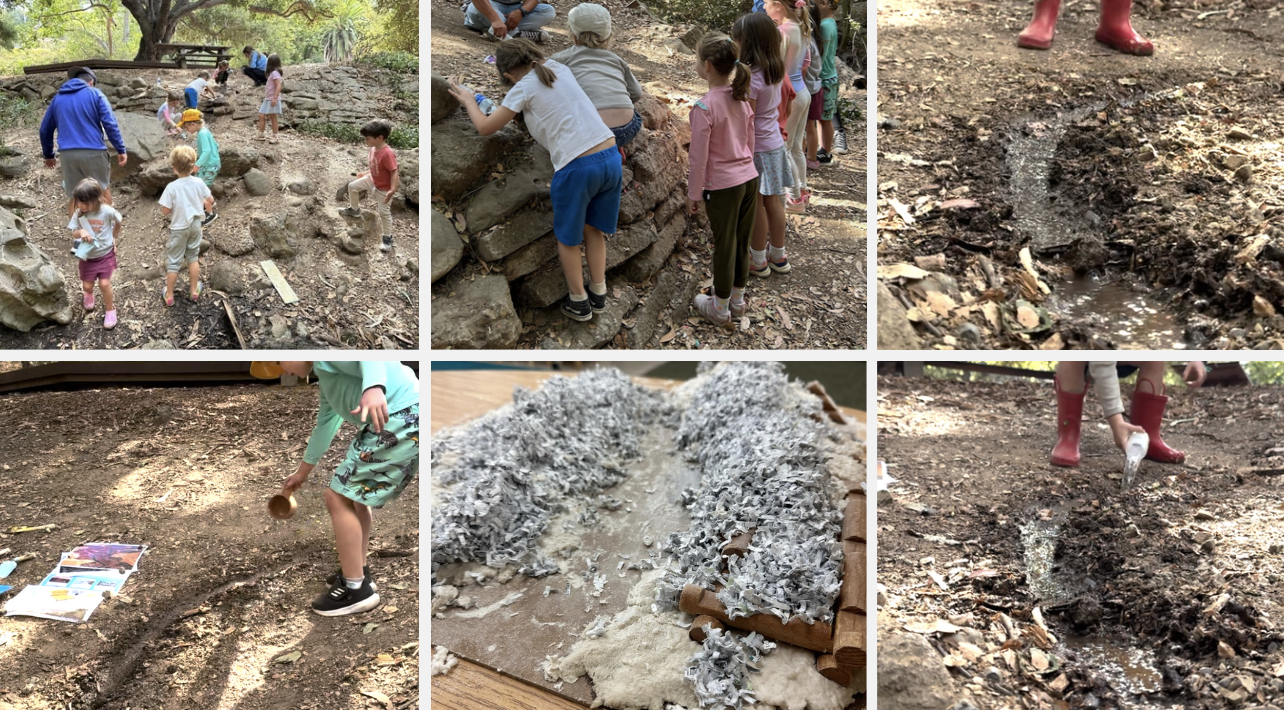
A memorable experience: Exploring erosion in Early Childhood Education.